Dodge Stealth Bolt Pattern, Tire Size, Rim Size, Center Bore, and Offsets
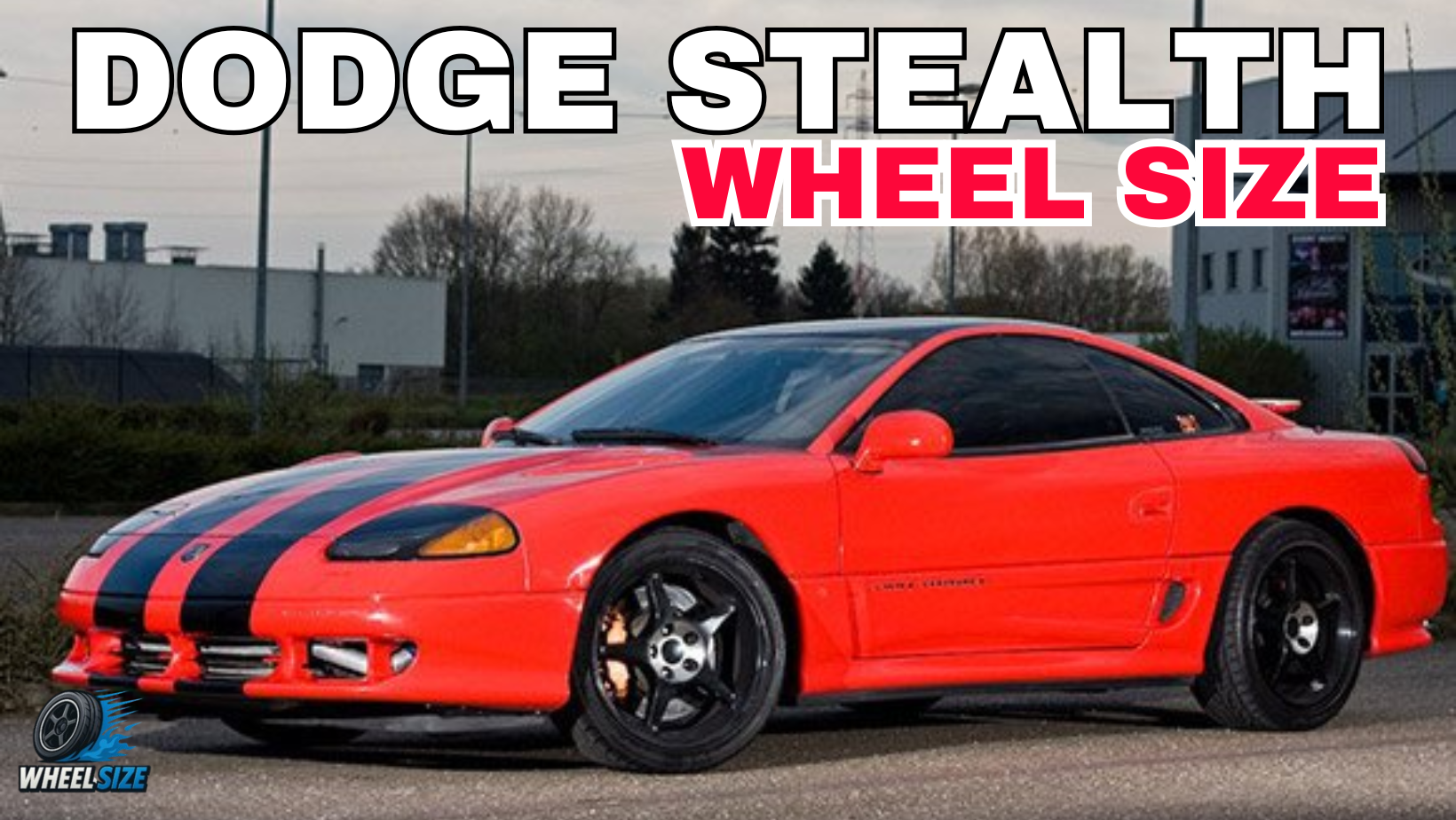
The Dodge Stealth is one of those rare 1990s cars that combines Japanese precision with American muscle style. Choosing the appropriate wheels and tires makes a big difference in how your Stealth looks and drives, no matter if you have the original model or the R/T Twin Turbo. This tutorial goes over all the crucial information you need to know about wheels, like the bolt pattern, offset, wheel size, and tire fitment. This way, you can choose wheels that fit correctly and improve the performance and stance of your car.
A brief look at the Dodge Stealth
Dodge and Mitsubishi worked together to make the Dodge Stealth, which was built between 1990 and 1997. It had a lot in common with the Mitsubishi 3000GT, however it had a Dodge badge on it. There were many versions of it, including front-wheel-drive and all-wheel-drive Twin Turbo types. Some were all about comfort, while others were all on performance. The Stealth is still a rare and collectible sports coupe today. People love its futuristic look, pop-up headlights, and shockingly advanced electronics for its day.
The FWD and AWD variants of the Stealth have different chassis codes: Z15 and Z16. It was mostly sold in North America, but it did have a tiny fan base around the world. The Z15 was lighter and easier to use. The Z16 Twin Turbo had all-wheel drive and four-wheel steering. Since both had the same 3.0L V6 engine, it was easy to find the right wheel specs for each trim.
Generations and Levels of Trim
The first models, from 1990 to 1993, had pop-up headlights and a more rounded shape. The facelift models from 1994 to 1997 have fixed headlights and a cleaner design. Dodge made the Stealth in a few different trims: Base, ES, R/T, and R/T Twin Turbo. Each trim had a somewhat different wheel and tire layout, with the high-performance variants needing wider tires for improved traction.
Dodge Stealth Wheel Fitment Summary
The Dodge Stealth had a bolt pattern of 5×114.3 mm and a center bore of 67.1 mm from 1990 to 1997. Most models had an offset of +35mm to +39 mm to keep things in line and give them enough space. The first models had 16-inch wheels, while the R/T and Twin Turbo trims got 17-inch factory wheels. The right tire sizes for the base models were 225/55R16, and for the performance trims, they were 245/45R17. Keeping these criteria will make sure that the car handles well, rides smoothly, and wears out evenly.
| Year | Hub Bore (mm) | Bolt Pattern | Thread Size | OEM Tire Sizes | OEM Rim Sizes | Offset Range (mm) | Tire Pressure | Wheel Size |
| 1990 | 67.1 | 5×114.3 | M12 x 1.5 | 205/65HR15 97H | 6.5Jx15 ET37 | 35 – 39 | 2.0 / — | 15″ |
| 1991 | 67.1 | 5×114.3 | M12 x 1.5 | 205/65HR15 97H | 6.5Jx15 ET37 | 35 – 39 | 2.0 / — | 15″ |
| 1992 | 67.1 | 5×114.3 | M12 x 1.5 | 225/55VR16 95V | 7Jx16 ET40 | 35 – 39 | 2.1 / — | 16″ |
| 1993 | 67.1 | 5×114.3 | M12 x 1.5 | 225/55VR16 95V | 7Jx16 ET40 | 35 – 39 | 2.1 / — | 16″ |
| 1994 | 67.1 | 5×114.3 | M12 x 1.5 | 245/45VR17 94V | 7.5Jx17 ET45 | 35 – 39 | 2.3 / — | 17″ |
| 1995 | 67.1 | 5×114.3 | M12 x 1.5 | 245/45VR17 94V | 7.5Jx17 ET45 | 35 – 39 | 2.3 / — | 17″ |
| 1996 | 67.1 | 5×114.3 | M12 x 1.5 | 245/45VR17 94V | 7.5Jx17 ET45 | 35 – 39 | 2.3 / — | 17″ |
| 1997 | 67.1 | 5×114.3 | M12 x 1.5 | 245/45VR17 94V | 7.5Jx17 ET45 | 35 – 39 | 2.3 / — | 17″ |
Detailed Fitment by Trim Level
The wheels on each Stealth trim showed off its own style. The base and ES versions have smaller, lighter wheels that made driving every day more comfortable. The R/T was sportier and had bigger 17-inch alloys to help it turn better. The Twin Turbo had even larger wheels to handle the greater power and all-wheel drive technology. Here are the best fitments to keep your automobile running smoothly and looking good from all angles.
Dodge Stealth Base / ES
These versions came with 225/55R16 tires and 16×8-inch wheels as standard. The offset was between +46 mm and +50 mm, which kept the wheels flush with the fenders. These sizes make for a comfortable ride without making the steering less responsive, which is great for everyday driving. An 18×8-inch arrangement works well for aftermarket improvements without producing rubbing problems or affecting the speedometer reading too much.
Dodge Stealth R/T
The R/T models had better performance because they had 17×8-inch alloy wheels with 245/45R17 tires on them. This configuration gave the car more contact with the road and made it stand up straighter. The +46 mm offset worked nicely to keep the handling tight and easy to predict. Many owners like 18-inch modifications because they make the car seem sharper, but it’s best to keep the offset near to the factory setting to make sure there is enough space around the brakes and suspension.
Dodge Stealth R/T Twin Turbo (AWD, Z16)
This variant was the best of the bunch, with all-wheel drive, twin turbos, and steering on all four wheels. The wheels were 17 by 8.5 inches and the tires were 245/45R17. The offset was very important here because anything less than +35 mm could cause rubbing or problems with the brakes. People who are really into cars typically go to 18×9 or 18×9.5-inch wheels with a +40 mm offset to get the best of both worlds: looks and performance, while yet preserving the aggressive stance.
Suggested aftermarket fitment choices
An 18×8.5 or 18×9-inch wheel fits perfectly on most Stealth grades if you’re upgrading from stock. For optimum fender alignment, stay within the range of +35 mm to +45 mm. Tires like 245/40R18 keep the original rolling diameter and stop rubbing. Wheels from companies like Enkei, Work, or Rays Engineering combine performance with style that is true to the time. Choose lighter alloys to make your car easier to drive and faster to respond to acceleration.
Wheels that are 18×8.5 inches are the perfect size for everyday use because they look good and work well. You can get more grip by using 18×9.5-inch wheels with 255/40R18 tires for furious driving or on the track. Always make sure your suspension and fenders have enough space so you don’t scrape when you make quick bends or carry a lot of weight.
Brands and Styles of Wheels That Fit Well
Wheels from Enkei, Konig, and XXR fit the Stealth well and don’t need any further drilling. Rays and Work wheels are JDM quality and lightweight, so they give your car a more polished look. For an OEM-plus effect, choose neutral hues like gunmetal or silver. For a sporty design that suits the car’s sporty DNA, use bronze.
Tire Fitment and Staggered Setups
The Dodge Stealth initially had a square layout, which meant that all four tires were the same size. That’s perfect for keeping things balanced and rotating the tires. But if you want a sportier look, you can choose a staggered arrangement with rear tires that are a little wider, like 245/40 front and 275/40 rear. To keep the speedometer accurate and the handling predictable, just make sure the rolling diameter stays near to stock.
What the wheel bolt pattern, offset, and hub bore mean
The Stealth has a bolt pattern of 5×114.3 mm, which means that there are five lug nuts on a circle that is 114.3 mm diameter. The center bore is 67.1 mm, which makes sure that the hub fits correctly. Use hub-centric rings on aftermarket wheels to stop vibration. The offset, which should be between +40 mm and +50 mm, tells the wheel how far it is from the hub. Keeping this range keeps the suspension geometry in good shape and stops rubbing.
Tips for upgrading your wheels and tires
To make sure the wheels fit snugly, always tighten the nuts to the right torque, which is roughly 85 ft-lb. Check your alignment after the upgrade to make sure your tires don’t wear unevenly. Add hub-centric rings to aftermarket wheels to cut down on vibrations. Check the clearance before you put the brakes on your car if they are bigger. It’s also a good idea to have a pro balance your tires so you can ride smoothly at high speeds.
Common Problems with Fitment and How to Fix Them
The most typical problem with Stealth fitment is that the tires are too big or the offset is wrong, which causes rubbing. Stay within OEM parameters to avoid it. If the wheels aren’t balanced or the hub rings are missing, the car can shake. Check the fit of the wheels before putting on the tires, especially on R/T Turbo versions, to make sure there is enough room for the brakes. Taking a few extra minutes to make sure everything fits will save you money on tire or suspension wear later.
Conclusion
It’s not just about looks when you choose the appropriate wheel setup for your Dodge Stealth. It’s also about safety, performance, and retaining the car’s balance. Following the right fitment rules will make sure that your ride is smooth and that people will look at it. This is true whether you stick to factory specs or get an aftermarket improvement. Take your time to measure twice, install once, and enjoy driving a real 1990s icon that was made for speed and style.
FAQ’s
1. What is the pattern of the Dodge Stealth bolts?
All years and trims are 5×114.3 mm wide.
2. Is it possible to put 18-inch wheels on my Stealth?
Yes, 18×8.5 or 18×9-inch wheels fit perfectly if the offset is right.
3. What is the ideal offset for the R/T Twin Turbo?
The optimal clearance and stance are between +40 mm and +45 mm.
4. Can I use wheels from a Mitsubishi 3000GT on another car?
Yes, both automobiles share the same wheel specs.
5. What is the torque range for wheel nuts?
To make sure they fit securely and safely, tighten the lug nuts to around 85 ft-lb.





Post Comment