BMW M5 Bolt Pattern, Tire Size, Rim Size, Center Bore and Offsets
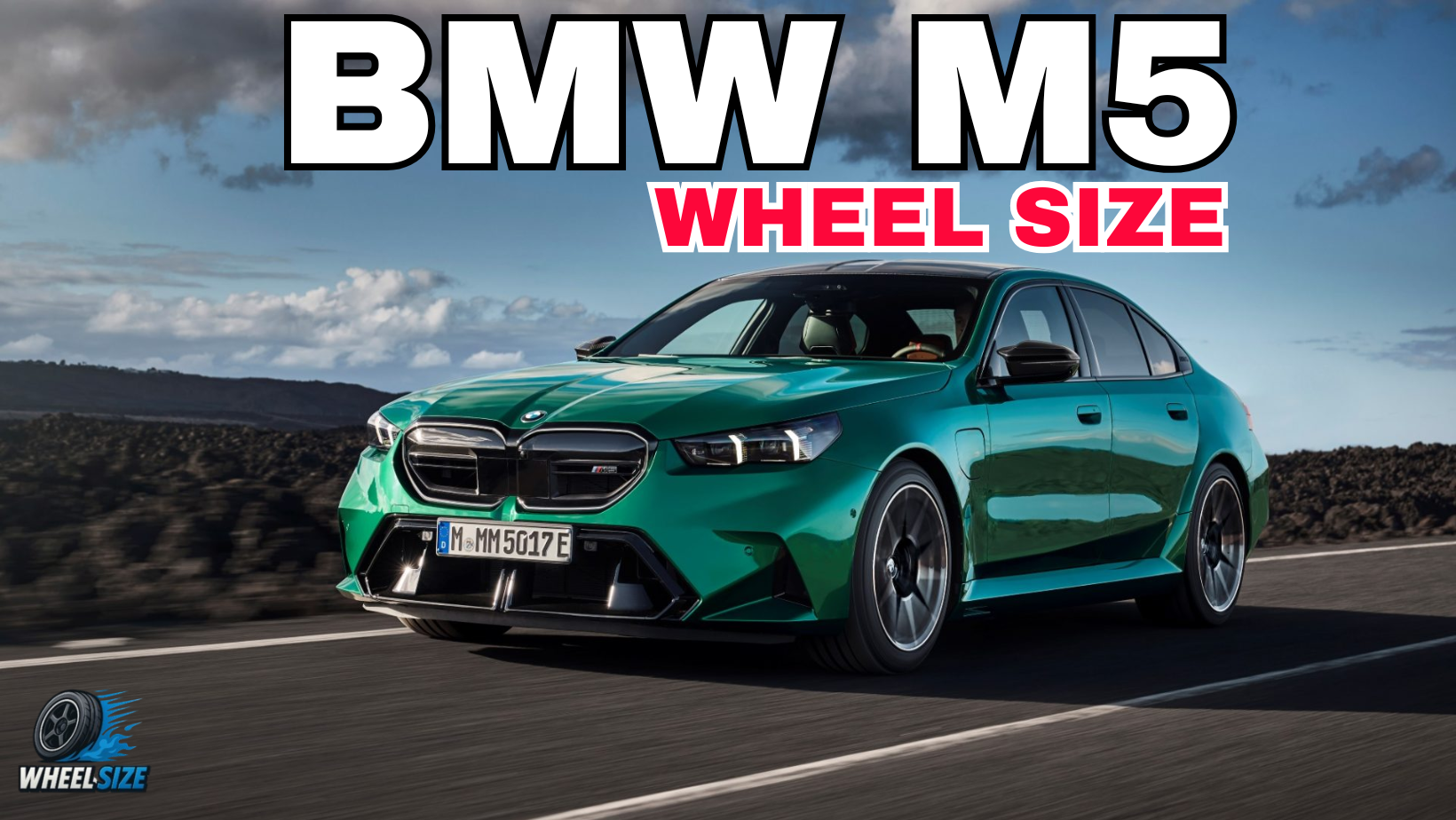
The BMW M5 is a benchmark for performance sedans, combining luxury with exhilarating power. Over the years, it has evolved through nine generations, each offering unique design cues and engineering upgrades. Choosing the right wheels for your M5 is more than a cosmetic decision—it directly affects handling, safety, and performance. Wheel specifications like bolt pattern, center bore, offset, and tire compatibility are crucial for a perfect fit. From the classic E28 M5 to the modern G90, understanding these details ensures you maintain optimal driving dynamics. Whether upgrading to aftermarket wheels or maintaining OEM fitment, a well-chosen setup complements both aesthetics and functionality, preserving the car’s legendary performance character.
How to Choose the Right BMW M5 Wheels
Selecting the ideal wheels for your BMW M5 requires attention to several key factors. The bolt pattern (PCD) ensures the wheel aligns perfectly with the hub, while the center bore guarantees a snug fit to prevent vibrations. Wheel offsets influence handling and suspension geometry, and rim size impacts both appearance and ride quality.Tire compatibility is of equal significance, influencing traction, braking efficacy, and overall comfort. For M5 proprietors contemplating aftermarket enhancements, adherence to original equipment manufacturer (OEM) load ratings and fastener specifications is paramount. A comprehensive understanding of these specifications facilitates secure customization without detracting from the vehicle’s performance. Through meticulous planning, wheel upgrades can improve the car’s stance, cornering capabilities, and the overall driving experience, all while upholding the fundamental principles of BMW M5’s engineering prowess.
BMW M5 Wheel Fitment by Generation
BMW M5 I (E28) [1985–1988]
The E28 M5, BMW’s inaugural performance sedan, incorporated a conventional 5×120 bolt pattern and a 72.6 mm center bore, aligning with the engineering standards of the 1980s. OEM rim dimensions varied from 15” to 16”, generally featuring offsets between 20–25 mm, thereby balancing performance and comfort. Recommended tire sizes encompassed 205/55 R15 for the front and 225/50 R16 for the rear.
Standard wheel fasteners for the E28 were M12x1.5 lug bolts. Many owners now choose aftermarket wheels that mirror the original style, preserving the E28’s character while also boosting handling and looks. Getting the fit right is key; it keeps that classic driving experience alive and ensures the sedan stays stable on today’s roads.
| Year | Hub Bore (mm) | Bolt Pattern | Thread Size | Front Tire | Rear Tire | Front Rim | Rear Rim | Offset Range (mm) | Pressure (bar) |
|---|---|---|---|---|---|---|---|---|---|
| 1985 | 72.6 | 5×120 | M12 x 1.5 | 205/55 R15 | 225/50 R16 | 7Jx15 | 7.5Jx16 | 20–25 | 2.2 / 2.4 |
| 1986 | 72.6 | 5×120 | M12 x 1.5 | 205/55 R15 | 225/50 R16 | 7Jx15 | 7.5Jx16 | 20–25 | 2.2 / 2.4 |
| 1987 | 72.6 | 5×120 | M12 x 1.5 | 205/55 R15 | 225/50 R16 | 7Jx15 | 7.5Jx16 | 20–25 | 2.2 / 2.4 |
| 1988 | 72.6 | 5×120 | M12 x 1.5 | 205/55 R15 | 225/50 R16 | 7Jx15 | 7.5Jx16 | 20–25 | 2.2 / 2.4 |
BMW M5 II (E34) [1988–1995]
The E34 M5 built on the earlier model’s strengths, featuring a 5×120 bolt pattern and a 72.6 mm center bore. Factory wheels were available in 16” or 17” sizes, with offsets between 15–25 mm. Recommended tires, such as the 225/50 R16 and 235/45 R17, provided better grip for the V8 engine. Wheel fasteners were M12x1.5 lug bolts. This generation’s design allowed for easy aftermarket upgrades, frequently improving braking and cornering capabilities.
Maintaining the correct bolt pattern, hub bore, and offset is critical to prevent vibrations and preserve suspension geometry. Properly fitted wheels are key to the M5’s renowned equilibrium of precise handling and practical everyday performance.
| Year | Hub Bore (mm) | Bolt Pattern | Thread Size | Tire | Rim | Offset Range (mm) | Pressure (bar) |
|---|---|---|---|---|---|---|---|
| 1988 | 72.6 | 5×120 | M12 x 1.5 | 225/50 R16 / 235/45 R17 | 8Jx16 – 8Jx17 | 15–25 | 2.3 / 2.5 |
| 1989 | 72.6 | 5×120 | M12 x 1.5 | 225/50 R16 / 235/45 R17 | 8Jx16 – 8Jx17 | 15–25 | 2.3 / 2.5 |
| 1990 | 72.6 | 5×120 | M12 x 1.5 | 225/50 R16 / 235/45 R17 | 8Jx16 – 8Jx17 | 15–25 | 2.3 / 2.5 |
| 1991 | 72.6 | 5×120 | M12 x 1.5 | 225/50 R16 / 235/45 R17 | 8Jx16 – 8Jx17 | 15–25 | 2.3 / 2.5 |
| 1992 | 72.6 | 5×120 | M12 x 1.5 | 225/50 R16 / 235/45 R17 | 8Jx16 – 8Jx17 | 15–25 | 2.3 / 2.5 |
| 1993 | 72.6 | 5×120 | M12 x 1.5 | 225/50 R16 / 235/45 R17 | 8Jx16 – 8Jx17 | 15–25 | 2.3 / 2.5 |
| 1994 | 72.6 | 5×120 | M12 x 1.5 | 225/50 R16 / 235/45 R17 | 8Jx16 – 8Jx17 | 15–25 | 2.3 / 2.5 |
| 1995 | 72.6 | 5×120 | M12 x 1.5 | 225/50 R16 / 235/45 R17 | 8Jx16 – 8Jx17 | 15–25 | 2.3 / 2.5 |
BMW M5 III (E39) [1998–2003]
The E39 M5 featured a more assertive design, employing a 5×120 bolt pattern and a 74.1 mm center bore. OEM rim sizes varied from 17” to 18”, with offsets ranging from 20–30 mm. Recommended tire sizes were 235/45 R17 at the front and 265/40 R17 at the rear. M12x1.5 lug bolts were used for wheel fasteners. This generation successfully blended performance and comfort, making proper wheel selection essential for maintaining its balance. Owners frequently opt for lightweight alloys or period-correct designs to enhance the E39’s sophisticated yet athletic aesthetic.
Correct fitment is key; it guarantees precise handling, lessens the strain on suspension parts, and preserves the M5’s celebrated driving experience.
| Year | Hub Bore (mm) | Bolt Pattern | Thread Size | Front Tire | Rear Tire | Front Rim | Rear Rim | Offset Range (mm) | Pressure (bar) |
|---|---|---|---|---|---|---|---|---|---|
| 1998 | 74.1 | 5×120 | M12 x 1.5 | 235/45 R17 | 265/40 R17 | 8Jx17 | 9Jx17 | 20–30 | 2.4 / 2.6 |
| 1999 | 74.1 | 5×120 | M12 x 1.5 | 235/45 R17 | 265/40 R17 | 8Jx17 | 9Jx17 | 20–30 | 2.4 / 2.6 |
| 2000 | 74.1 | 5×120 | M12 x 1.5 | 235/45 R17 | 265/40 R17 | 8Jx17 | 9Jx17 | 20–30 | 2.4 / 2.6 |
| 2001 | 74.1 | 5×120 | M12 x 1.5 | 235/45 R17 | 265/40 R17 | 8Jx17 | 9Jx17 | 20–30 | 2.4 / 2.6 |
| 2002 | 74.1 | 5×120 | M12 x 1.5 | 235/45 R17 | 265/40 R17 | 8Jx17 | 9Jx17 | 20–30 | 2.4 / 2.6 |
| 2003 | 74.1 | 5×120 | M12 x 1.5 | 235/45 R17 | 265/40 R17 | 8Jx17 | 9Jx17 | 20–30 | 2.4 / 2.6 |
BMW M5 IV (E60/E61) [2004–2010]
The E60/E61 M5 boasted a 5×120 bolt pattern and a 72.6 mm center bore, perfectly suited to its powerful V10 engine. Factory wheels varied from 18” to 19” with offsets between 25–30 mm. Recommended tire sizes were 245/40 R18 up front and 275/35 R18 in the rear. The wheel fasteners were M12x1.5 lug bolts. Given the M5’s increased power and advanced chassis, precise wheel fitment was essential for stability and effective braking. Many aftermarket choices emphasize lightweight alloys to improve responsiveness. Proper hub-centric fit, offset, and tire sizing are vital to keep the E60 M5 performing as intended—precise, responsive, and a joy to drive.
| Year | Hub Bore (mm) | Bolt Pattern | Thread Size | Front Tire | Rear Tire | Front Rim | Rear Rim | Offset Range (mm) | Pressure (bar) |
|---|---|---|---|---|---|---|---|---|---|
| 2004 | 72.6 | 5×120 | M12 x 1.5 | 245/40 R18 | 275/35 R18 | 8.5Jx18 | 9.5Jx18 | 25–30 | 2.5 / 2.8 |
| 2005 | 72.6 | 5×120 | M12 x 1.5 | 245/40 R18 | 275/35 R18 | 8.5Jx18 | 9.5Jx18 | 25–30 | 2.5 / 2.8 |
| 2006 | 72.6 | 5×120 | M12 x 1.5 | 245/40 R18 | 275/35 R18 | 8.5Jx18 | 9.5Jx18 | 25–30 | 2.5 / 2.8 |
| 2007 | 72.6 | 5×120 | M12 x 1.5 | 245/40 R18 | 275/35 R18 | 8.5Jx18 | 9.5Jx18 | 25–30 | 2.5 / 2.8 |
| 2008 | 72.6 | 5×120 | M12 x 1.5 | 245/40 R18 | 275/35 R18 | 8.5Jx18 | 9.5Jx18 | 25–30 | 2.5 / 2.8 |
| 2009 | 72.6 | 5×120 | M12 x 1.5 | 245/40 R18 | 275/35 R18 | 8.5Jx18 | 9.5Jx18 | 25–30 | 2.5 / 2.8 |
| 2010 | 72.6 | 5×120 | M12 x 1.5 | 245/40 R18 | 275/35 R18 | 8.5Jx18 | 9.5Jx18 | 25–30 | 2.5 / 2.8 |
BMW M5 V (F10) [2011–2013]
The F10 M5, produced from 2011 to 2013, introduced turbocharged power and a more sophisticated chassis. It featured a 5×120 bolt pattern and a center bore of 72.6 mm. Original equipment manufacturer (OEM) wheels came in 19” or 20” sizes, with offsets between 20 and 35 mm. Recommended tire sizes were 245/35 R19 for the front and 265/35 R19 for the rear. The wheel fasteners were M12x1.5 lug bolts. The choice of wheels significantly affects handling, braking, and ride comfort, particularly given the F10’s increased weight. Correctly sized rims are essential for maintaining suspension geometry and preventing vibrations. Many owners opt for staggered setups to improve the car’s appearance and grip, but it’s crucial to ensure compatibility with the bolt pattern, hub bore, and offset to guarantee safety and peak performance, whether the M5 is stock or modified.
| Year | Hub Bore (mm) | Bolt Pattern | Thread Size | Front Tire | Rear Tire | Front Rim | Rear Rim | Offset Range (mm) | Tire Pressure (bar) |
|---|---|---|---|---|---|---|---|---|---|
| 2011 | 72.6 | 5×120 | M12 x 1.5 | 245/35 R19 | 265/35 R19 | 9Jx19 | 10Jx19 | 20–35 | 2.5 / 2.8 |
| 2012 | 72.6 | 5×120 | M12 x 1.5 | 245/35 R19 | 265/35 R19 | 9Jx19 | 10Jx19 | 20–35 | 2.5 / 2.8 |
| 2013 | 72.6 | 5×120 | M12 x 1.5 | 245/35 R19 | 265/35 R19 | 9Jx19 | 10Jx19 | 20–35 | 2.5 / 2.8 |
BMW M5 V (F10) Facelift [2013–2017]
The F10 LCI M5 retained the 5×120 bolt pattern and a 72.6 mm center bore, accommodating 19” and 20” factory wheels with offsets ranging from 25 to 35 mm. The suggested tire sizes were 245/35 R19 for the front and 265/35 R19 for the rear. M12x1.5 lug bolts secured the wheels. Subtle chassis refinements enhanced handling, making the right wheel choice critical. Aftermarket options frequently emphasize lighter alloys or unique finishes, boosting visual appeal without sacrificing performance. Adhering to the correct bolt pattern, center bore, offset, and tire dimensions safeguards the M5’s distinctive driving characteristics, guaranteeing responsiveness and stability on diverse road surfaces.
| Year | Hub Bore (mm) | Bolt Pattern | Thread Size | Front Tire | Rear Tire | Front Rim | Rear Rim | Offset Range (mm) | Tire Pressure (bar) |
|---|---|---|---|---|---|---|---|---|---|
| 2013 | 72.6 | 5×120 | M12 x 1.5 | 245/35 R19 | 265/35 R19 | 9Jx19 | 10Jx19 | 25–35 | 2.5 / 2.8 |
| 2014 | 72.6 | 5×120 | M12 x 1.5 | 245/35 R19 | 265/35 R19 | 9Jx19 | 10Jx19 | 25–35 | 2.5 / 2.8 |
| 2015 | 72.6 | 5×120 | M12 x 1.5 | 245/35 R19 | 265/35 R19 | 9Jx19 | 10Jx19 | 25–35 | 2.5 / 2.8 |
| 2016 | 72.6 | 5×120 | M12 x 1.5 | 245/35 R19 | 265/35 R19 | 9Jx19 | 10Jx19 | 25–35 | 2.5 / 2.8 |
| 2017 | 72.6 | 5×120 | M12 x 1.5 | 245/35 R19 | 265/35 R19 | 9Jx19 | 10Jx19 | 25–35 | 2.5 / 2.8 |
BMW M5 VI (F90) [2017–2020]
The F90 M5 marked the introduction of all-wheel drive, featuring a 5×112 bolt pattern and a 66.6 mm center bore. OEM wheels ranged from 19” to 20”, with offsets between 20 and 35 mm. Recommended tire sizes were 245/40 R19 for the front and 265/40 R19 for the rear. The wheel fasteners are M14x1.25 lug bolts. The choice of wheels directly impacts handling and all-wheel-drive performance. While aftermarket and staggered setups can improve grip, it’s crucial to keep the bolt pattern and hub-centric alignment correct. Properly fitted wheels strike a balance between traction, comfort, and braking, enabling the F90 M5 to deliver its designed blend of speed, stability, and cornering prowess, all while ensuring safety.
| Year | Hub Bore (mm) | Bolt Pattern | Thread Size | Front Tire | Rear Tire | Front Rim | Rear Rim | Offset Range (mm) | Tire Pressure (bar) |
|---|---|---|---|---|---|---|---|---|---|
| 2017 | 66.6 | 5×112 | M14 x 1.25 | 245/40 R19 | 265/40 R19 | 9Jx19 | 10Jx19 | 20–35 | 2.5 / 2.8 |
| 2018 | 66.6 | 5×112 | M14 x 1.25 | 245/40 R19 | 265/40 R19 | 9Jx19 | 10Jx19 | 20–35 | 2.5 / 2.8 |
| 2019 | 66.6 | 5×112 | M14 x 1.25 | 245/40 R19 | 265/40 R19 | 9Jx19 | 10Jx19 | 20–35 | 2.5 / 2.8 |
| 2020 | 66.6 | 5×112 | M14 x 1.25 | 245/40 R19 | 265/40 R19 | 9Jx19 | 10Jx19 | 20–35 | 2.5 / 2.8 |
BMW M5 VI (F90) LCI [2020–2023]
The F90 LCI M5 retains the 5×112 bolt pattern and 66.6 mm center bore, with factory rims available in 19”–20” sizes and offsets ranging from 20–35 mm. Recommended tire sizes are 245/40 R19 for the front and 265/40 R19 for the rear. The wheel fasteners are M14x1.25 lug bolts. LCI updates bolstered chassis rigidity and refined the suspension, meaning any wheel upgrade needs to adhere to the original equipment manufacturer (OEM) specs. While swapping in lightweight forged wheels or eye-catching alloys can boost the car’s looks and lessen unsprung weight, the bolt pattern, offset, and hub bore must be an exact match. Correct fitment is key to maintaining the driving experience, steering feel, and overall performance of the contemporary F90 M5.
| Year | Hub Bore (mm) | Bolt Pattern | Thread Size | Front Tire | Rear Tire | Front Rim | Rear Rim | Offset Range (mm) | Tire Pressure (bar) |
|---|---|---|---|---|---|---|---|---|---|
| 2020 | 66.6 | 5×112 | M14 x 1.25 | 245/40 R19 | 265/40 R19 | 9Jx19 – 9.5Jx20 | 10Jx19 – 10.5Jx20 | 20–35 | 2.5 / 2.8 |
| 2021 | 66.6 | 5×112 | M14 x 1.25 | 245/40 R19 | 265/40 R19 | 9Jx19 – 9.5Jx20 | 10Jx19 – 10.5Jx20 | 20–35 | 2.5 / 2.8 |
| 2022 | 66.6 | 5×112 | M14 x 1.25 | 245/40 R19 | 265/40 R19 | 9Jx19 – 9.5Jx20 | 10Jx19 – 10.5Jx20 | 20–35 | 2.5 / 2.8 |
| 2023 | 66.6 | 5×112 | M14 x 1.25 | 245/40 R19 | 265/40 R19 | 9Jx19 – 9.5Jx20 | 10Jx19 – 10.5Jx20 | 20–35 | 2.5 / 2.8 |
BMW M5 VII (G90, G99) [2024–2027]
The G90/G99 M5 features a 5×112 bolt pattern and a 66.6 mm center bore, accommodating OEM wheels ranging from 19” to 21” with offsets between 20–35 mm. Suggested tire sizes are 275/35 R19 for the front and 285/30 R20 for the rear. The wheel fasteners are M14x1.25 lug bolts. This generation prioritizes advanced performance and luxury, making precise fitment critical. Aftermarket wheels provide opportunities for personalization and weight savings, but they must still conform to the bolt pattern, hub bore, and offset to avoid disrupting electronic systems or all-wheel-drive handling. Correctly fitted wheels are essential for maintaining the M5’s ride comfort, handling, and braking performance, ensuring it behaves precisely as intended.
| Year | Hub Bore (mm) | Bolt Pattern | Thread Size | Front Tire | Rear Tire | Front Rim | Rear Rim | Offset Range (mm) | Tire Pressure (bar) |
|---|---|---|---|---|---|---|---|---|---|
| 2024 | 66.6 | 5×112 | M14 x 1.25 | 275/35 R19 | 285/30 R20 | 9Jx19 – 10Jx20 | 10Jx20 – 11Jx21 | 20–35 | 2.4 / 2.6 |
| 2025 | 66.6 | 5×112 | M14 x 1.25 | 275/35 R19 | 285/30 R20 | 9Jx19 – 10Jx20 | 10Jx20 – 11Jx21 | 20–35 | 2.4 / 2.6 |
| 2026 | 66.6 | 5×112 | M14 x 1.25 | 275/35 R19 | 285/30 R20 | 9Jx19 – 10Jx20 | 10Jx20 – 11Jx21 | 20–35 | 2.4 / 2.6 |
| 2027 | 66.6 | 5×112 | M14 x 1.25 | 275/35 R19 | 285/30 R20 | 9Jx19 – 10Jx20 | 10Jx20 – 11Jx21 | 20–35 | 2.4 / 2.6 |
Choosing the Right Wheels: Key Considerations
Before buying aftermarket wheels, always double-check the bolt pattern and center bore. Staggered wheel setups, where the rear wheels are larger, can boost traction and handling, but they must adhere to the recommended offset. The size of the tires you choose directly impacts ride quality, braking, and cornering. Unless you’re consulting a professional, it’s best to stick with the original equipment manufacturer (OEM) specifications. Be aware that wheel fasteners differ by model year; using the wrong lug nuts can create safety issues.
Aftermarket Wheel Options
Lightweight forged wheels can reduce unsprung weight, leading to improved responsiveness. Custom finishes can give the M5 a more aggressive or refined appearance, provided the specifications are met, without affecting performance. For the F90 and G90 all-wheel-drive models, getting the hub-centric alignment just right is key. Otherwise, you could end up with annoying vibrations or even problems with the electronic sensors.
FAQ’s
Can I put bigger wheels on my M5?
Yes, you can, but you need to be careful. Make sure the offset, bolt pattern, and hub bore are all correct. Otherwise, you could mess up the handling or the suspension.
Do I need hub-centric rings if I get new wheels?
It’s a good idea, especially for the F90 and G90 M5s. They help get rid of vibrations and make sure everything lines up perfectly.
Can I use wheels from different model years?
Only if the bolt pattern, center bore, and offset are the same. Wheels from the F90 and G90 M5s might work together if you use the right spacers.

Post Comment