Dodge Stratus Bolt Pattern, Tire Size, Rim Size, Center Bore, and Offsets
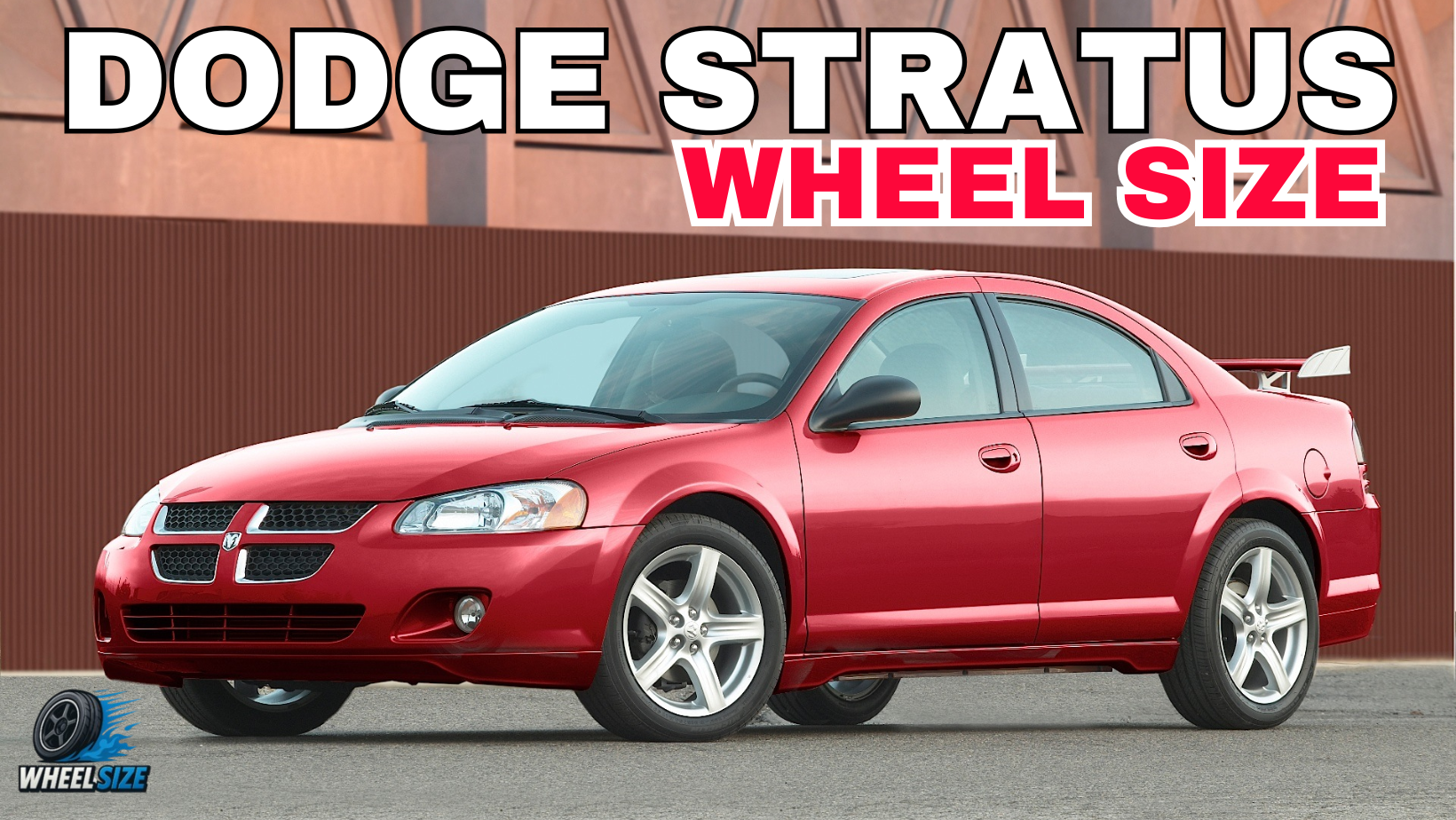
The Dodge Stratus was one of the best mid-size sedans from Dodge since it was comfortable and fast at the same time. It went through two generations between 1995 and 2006, and each one had its own set of wheel specifications and fitment information. Picking the right wheel setup for your Stratus will make it easier to drive, wear the tires evenly, and make the ride smoother. This guide has all the important information you need, like bolt pattern, offset, and tire size, to help you select the right wheel fitment for both generations of the Dodge Stratus.
Dodge Stratus Wheel Fitment Summary
Here’s a short look at the Dodge Stratus wheel statistics before we go into each model. The first-generation Stratus (1995–2000) has a 5×100 bolt pattern and a 57.1 mm center bore. The second model (2001–2006) has the same characteristics for sedans but different ones for coupes. The coupe versions are constructed on a Mitsubishi platform and have a 5×114.3 bolt pattern and a 67.1 mm barrel. When buying new wheels or changing sizes from factory sizes, it’s important to remember this difference. The next sections make it quite clear how all of these fitting data apply to each model year and body style.
Dodge Stratus I (JA) [1995–2000] Fitment Details
The first Dodge Stratus came out in 1995 and was recognized for its aerodynamic shape and dependable performance. It came in many trims and had powerful and fuel-efficient four-cylinder and V6 engines. This model has the same fitting pattern as the Cirrus and Breeze because it was built on the Chrysler JA platform. It was easy to fit wheels because it was lighter and smaller, especially for people who were upgrading to aftermarket options.
| Year | Hub Bore (mm) | Bolt Pattern | Thread Size | OEM Tire Sizes | OEM Rim Sizes | Offset Range (mm) | Tire Pressure (F/R bar) | Wheel Size Range |
| 1995 | 57.1 | 5×100 | M12 x 1.5 | 195/70R14 90S | 6Jx14 ET37 | 35 – 39 | 2.0 / — | 14″ |
| 1996 | 57.1 | 5×100 | M12 x 1.5 | 195/65R15 90T | 6Jx15 ET41 | 39 – 43 | 2.2 / — | 15″ |
| 1997 | 57.1 | 5×100 | M12 x 1.5 | 195/60R16 89T | 6Jx16 ET40 | 39 – 43 | 2.2 / — | 16″ |
| 1998 | 57.1 | 5×100 | M12 x 1.5 | 205/55R16 89H | 6.5Jx16 ET40 | 39 – 43 | 2.4 / — | 16″ |
| 1999 | 57.1 | 5×100 | M12 x 1.5 | 205/50R17 86H | 6.5Jx17 ET40 | 39 – 43 | 2.4 / — | 17″ |
| 2000 | 57.1 | 5×100 | M12 x 1.5 | 205/45R18 85V | 7Jx18 ET38 | 39 – 43 | 2.5 / — | 18″ |
Wheel Specifications
The JA Stratus used a 5×100 bolt pattern, which was popular in a lot of Chrysler and Dodge sedans from that time. The center bore was 57.1 mm, which made sure the fit was snug around the hub. Most factory wheels had an offset of 39 to 43 mm, and the lug nuts had a 12×1.5 thread. These specifications are perfect for immediate replacement or minor upgrades without any changes.
Most JA Stratus vehicles came with wheels that were 14 to 16 inches in diameter, depending on the trim level. 195/70R14, 205/60R15, and 205/55R16 were some of the most common tire sizes. These were comfortable and good for everyday driving. Drivers who wanted better handling typically switched to a tire that was a little wider but kept the overall diameter the same so the speedometer would still work.
Recommended Fitment for Aftermarket
It’s easy to upgrade the first-generation Stratus. Most owners choose 17x7J or 17×7.5J wheels with 215/50R17 tires to give their cars a modern look. Keeping the offset between 38 and 42 mm keeps the right amount of space without rubbing. Stay away from wheels with very low offsets because they can change how the suspension works and how the steering feels.
Dodge Stratus II (JR) [2001–2006] Fitment Details
The second-generation Stratus came out in 2001 with a better JR platform and a more comfortable ride. It was available as a sedan and a coupe, however the coupe was different mechanically and shared many parts with Mitsubishi vehicles. The sedan was made for comfort for families, while the coupe was made to look more sporty. Because of these variations, each version had its own fitting specifications.
| Year | Hub Bore (mm) | Bolt Pattern | Thread Size | OEM Tire Sizes | OEM Rim Sizes | Offset Range (mm) | Tire Pressure (F/R bar) | Wheel Size Range |
| 2001 | 57.1 | 5×100 | M12 x 1.5 | 205/65R15 91T | 6Jx15 ET42 | 40 – 44 | 2.1 / — | 15″ |
| 2002 | 57.1 | 5×100 | M12 x 1.5 | 205/60R16 90T | 6.5Jx16 ET44 | 42 – 46 | 2.1 / — | 16″ |
| 2003 | 57.1 | 5×100 | M12 x 1.5 | 205/55R17 90H | 6.5Jx17 ET45 | 42 – 46 | 2.3 / — | 17″ |
| 2004 | 57.1 | 5×100 | M12 x 1.5 | 215/50R17 91H | 6.5Jx17 ET45 | 42 – 46 | 2.3 / — | 17″ |
| 2005 | 57.1 | 5×100 | M12 x 1.5 | 215/45R18 89V | 7Jx18 ET42 | 42 – 46 | 2.5 / — | 18″ |
| 2006 | 57.1 | 5×100 | M12 x 1.5 | 215/45R18 89V | 7Jx18 ET42 | 42 – 46 | 2.5 / — | 18″ |
Sedan Fitment (JR Platform)
The sedan variant still had the same 5×100 bolt pattern and a center bore of 57.1 mm. Most factory wheels were 15 to 17 inches in diameter and had an offset of 42 to 46 mm. Most versions had a 12×1.5 thread pitch, which is the same as other Dodge cars. Depending on the trim level, stock tire widths were often 205/60R15 or 215/50R17.
Fitment for Coupes (Mitsubishi Platform)
The Stratus Coupe has a different set of wheels than the sedan because it was built on the same basis as the Mitsubishi Eclipse. It had a bolt pattern of 5×114.3 and a hub bore of 67.1 mm, which was bigger. The offset range was between 44 and 48 mm, which was perfect for keeping the handling balanced. The coupe had a more aggressive stance than the sedan because factory wheels may be up to 17 inches wide.
| Year | Hub Bore (mm) | Bolt Pattern | Thread Size | OEM Tire Sizes | OEM Rim Sizes | Offset Range (mm) | Tire Pressure (F/R bar) | Wheel Size Range |
| 2001 | 67.1 | 5×114.3 (5×4.5) | M12 x 1.5 | 205/60R16 91T | 6Jx16 ET46 | 44 – 48 | 2.1 / — | 16″ |
| 2002 | 67.1 | 5×114.3 (5×4.5) | M12 x 1.5 | 215/50R17 91H | 6.5Jx17 ET45 | 43 – 47 | 2.3 / — | 17″ |
| 2003 | 67.1 | 5×114.3 (5×4.5) | M12 x 1.5 | 205/55R17 90H | 6.5Jx17 ET46 | 43 – 47 | 2.3 / — | 17″ |
| 2004 | 67.1 | 5×114.3 (5×4.5) | M12 x 1.5 | 225/50R17 90V | 7Jx17 ET45 | 43 – 47 | 2.3 / — | 17″ |
| 2005 | 67.1 | 5×114.3 (5×4.5) | M12 x 1.5 | 225/45R18 89V | 7.5Jx18 ET42 | 43 – 47 | 2.5 / — | 18″ |
| 2006 | 67.1 | 5×114.3 (5×4.5) | M12 x 1.5 | 225/45R18 89V | 7.5Jx18 ET42 | 43 – 47 | 2.5 / — | 18″ |
Bolt Pattern, Offset & Center Bore Explained
The bolt pattern on your wheel tells it how to attach to the hub. If they don’t match, the wheel won’t fit safely. The offset changes how far the wheel is within or outside the fender, which has a direct effect on handling and clearance. The center bore, on the other hand, makes sure the wheel fits correctly on the hub, which stops vibration. If you know what these words mean, you may choose wheels that not only suit your Dodge Stratus but also work properly.
Best Wheel Upgrade Options for Dodge Stratus
Many people who own a Stratus want to give it a new look by putting on lightweight alloy or performance wheels. The car looks sleek and balanced with 17-inch wheels and lower-profile tires. The ride quality doesn’t suffer. Owners of coupes can go up to 18 inches for a sportier look. To minimize friction or alignment problems, always make sure the bolt pattern and offset are correct. For both generations, brands like Enkei, Konig, and Motegi have fantastic fitting possibilities.
FAQ’s
What is the bolt pattern for the Dodge Stratus?
A 5×100 bolt pattern is used by most Dodge Stratus sedans, while a 5×114.3 pattern is used by most coupes.
Is it possible to put 5×114.3 wheels on a 5×100 Stratus?
No, you would need adapters, and they could impact safety or alignment.
What is the biggest tire size that fits without rubbing?
215/50R17 fits great on sedans. Coupes can handle tires up to 225/45R18.
Can you use the same wheels on a Stratus Coupe and a Stratus Sedan?
No, their bolt patterns and hub bores are different because they are on distinct platforms.
Conclusion
It’s not just about looks when it comes to getting the appropriate wheel fitment for your Dodge Stratus; it’s also about safety, stability, and performance. Before you buy new wheels, make sure to check the bolt pattern, offset, and hub bore. Using the right specs makes sure that everything fits perfectly every time, whether you’re restoring an older JA model or upgrading your JR sedan or coupe.

Post Comment